Showing posts with label world. Show all posts

Nov 28, 2014

Visit Sisi to France .. 7 main axes

                                                     زيارة "السيسي" إلى فرنسا..7 محاور رئيسية

Fall of the bilateral relationship between France and Egypt in the long history has established a deep friendship between the two peoples, and on this basis, intends countries develop strong and lasting their partnership based on respect for the independence of each of the parties and sovereignty, and for this purpose, France and Egypt want to deepen their cooperation in all areas of interest joint, in the coming years.

1-bilateral dialogue on regional issues

France and Egypt want to consolidate the bilateral dialogue on the following international and regional issues: _

Due to the escalating violence in Israel and the Palestinian territories, Egypt and France stresses the urgent need for the resumption of peace negotiations in order to establish an independent, democratic and viable Palestinian state within the 1967 borders, living in peace and security alongside Israel. Pettmskhma and memories of the Arab peace initiative and Chdeddan the need to strengthen international escort to support the negotiations.

France and Egypt are determined to support the international mobilization to combat terrorist organizations that threaten regional and global security. With regard to Iraq, France and Egypt calls to support the Iraqi authorities in a program aimed at establishing a national unity row and the fight against terrorist group Daash. That the policy, which includes everyone and take all the components of Iraqi society in mind is the only policy that will allow the restoration of stability in Iraq and promote a sustainable rebound. He said the two presidents Bmsandthma military activity which France is participating since September 19, which aims to crush Daash organizing and supporting the Iraqi armed forces fighting the terrorist enemy in Iraq valiantly day. Expresses countries for their solidarity with the Iraqi people in this ordeal, and call for the international community to support the efforts of the Iraqi authorities to help refugees and displaced persons.


France, Egypt, and expresses its deep concern at the escalation of violence in Syria, and the growing strength of the organization Daash, and the continued suffering of the Syrian people. There is no way to end the crisis in Syria, but through a process of political transition based on the full implementation of the Geneva Declaration of June 30, 2012. The consistent France and Egypt on the need to safeguard the Syrian state institutions, which should not be confused with the system, in the context of the political transition process necessary and urgent. It expresses the countries in this regard for their support for the efforts of the Special Envoy of the United Nations to Syria, Mr. Staffan de Mistura, in preparation for the resumption of the political process.


Confirms France and Egypt adherence to the territorial integrity and unity of Libya, and share a deep concern about the worsening political and security situation, which leads to the growing terrorist threat. It must be the initiation of a comprehensive dialogue between all actors renounce violence expeditiously; there is no solution to the Libyan crisis only a political solution. This is the intent of the initiative taken by Libya's neighboring countries. France calls on Egypt and the House of Representatives, and the government that is set, and all the actors Libya to assume their responsibilities and engage in the way of a UN-sponsored dialogue, since this way is the only way to ensure the maintenance of the integrity of the country and the Libyan state and its institutions.
To this end, countries mention full of supporting mediation carried out by the Special Representative of the Secretary-General of the United Nations, and Anohan the importance of coordination between the Special Representative of Libya's neighboring countries.

And would like France and Egypt in promoting dialogue and cooperation between them on issues related to the regions of the Sahel and sub-Saharan Africa. France pays tribute to Egyptian efforts to play an active role in order to achieve peace and security in Africa, both in the African Union or through peacekeeping operations of the United Nations deployed in the African continent, especially in Mali.


France and Egypt are determined to fight against terrorist violence, which aims to destabilize communities in the countries along the shores of the Mediterranean, in the respect for human rights.
The two countries decided in this regard to strengthen their cooperation in this regard, especially in the exchange of information and training.

- And will hold consultations on all issues of common interest on a regular basis between the Ministries of Foreign Affairs (ministers or the Secretary General of the Ministry of Foreign Affairs and International Development / Assistant Minister on).

2-bilateral dialogue on multilateral files


France and Egypt is committed to the support of the International Organization of la Francophonie activities particularly in the field of crisis management and conflict resolution, which contributes to making the organization actor and influential head of the international level.


France and Egypt recognizes the strategic importance represented by the Euro-Mediterranean cooperation of the countries of the two shores of the Mediterranean Sea. Fully support the efforts of the Secretary General of the Union for the Mediterranean, Mr. Fathallah Sgelmasa, efforts to make the Union for the Mediterranean "agency" real, capable of carrying out structural projects, particularly in the area of youth employment and mobility, renewable energy, and to facilitate investment projects, in order to contribute economic growth and social development of the countries concerned.


France and Egypt is committed to mobilizing their partners in preparation for the conclusion of an ambitious global agreement to combat climate change in an effective manner, in 2015 in Paris, on the occasion of the twenty-first session of the Conference of Parties to the United Nations Framework Convention on Climate Change.

3-bilateral political dialogue


France pays tribute to objects of the important progress made in the implementation of major stages of the process of political transition in Egypt, which have been identified in the road map, dated July 8, 2013. expresses France is ready to support Egypt regarding the implementation of this transition process whose purpose in establishing a civil democratic institutions ensure that the principle of the rule of law and public freedoms, according to the provisions of the Constitution adopted by the Egyptian people in January 2014.

France and Egypt agree on the importance of continuing the political dialogue at a high level, particularly through bilateral regular visits.

4-economic cooperation

France and Egypt recorded that economic relations were not the level of the momentum of bilateral relations in the past years. The two countries want to deepen economic partnership that focuses on priority sectors, and focused on concrete projects that are in favor of the Egyptian people.

It is due to this partnership are held in the transport sector first, in which the French enterprises have realized the experience to put it in the Egyptian People's Service, and specifically, in Cairo Metro project, which project is the most prominent in bilateral cooperation since the eighties of the twentieth century, and which enjoys the financial support unprecedented does not stop renewed.

In addition to the many very important energy projects currently under way, the two countries underlines the importance of the peaceful and responsible use of nuclear energy and the possibilities of bilateral cooperation in this area.

France has been involved in major projects initiated by Egypt, especially the development of the Suez Canal project, in light of the "Egypt Economic Conference", which will be a success in the upcoming sign of progress in the process of economic and social advancement of Egypt.

And France and Egypt is keen to establish cooperation through concrete projects benefit the Egyptian people, for job creation and promotion of training and innovation. In this regard, the French Development Agency has provided a loan to Egypt worth one billion euros (and from 796 million euros the Egyptian state) to keep up with various projects. And will accelerate the pace of implementation of these projects in order to take into account the important needs of Egypt in terms of development.

France, Egypt, and expresses its willingness to work together on issues of common interest projects in Egypt, especially in cooperation programs with other countries. In this context, the countries of the United Arab Emirates welcomes proposals in this regard. And each party will appoint a representative to push this project forward, will also organize a tripartite meetings of the Parties in order to accelerate the implementation of the cooperation programs.

5-military cooperation
France and Egypt is willing to strengthen cooperation between the two countries in the military field, by striving together to implement joint projects in the maritime, air and land areas alike.

6-cultural, scientific and educational cooperation

France and Egypt are keen to deepen bilateral cooperation in the cultural, scientific, administrative and technical fields. They are ready to strengthen their cooperation in the field of combating illicit trafficking in cultural property, by conducting exchanges between professionals dealing with technical training and institutional support.

Also scheduled for this cooperation to delve deeper into the field of education and university education, especially in order to promote education doctoral level.

France and Egypt is also committed to reconsider the status of the French University in Egypt, in order to give new impetus to this project, which represents a symbol of cooperation between them.

Commends France and Egypt actively Senghor University in Alexandria, which is an executive agency of the International Organization of la Francophonie, which contribute to the preparation and implementation of university education programs to promote development in Africa.

France and Egypt will seek to organize a large joint cultural events in both countries in order to highlight the historical and cultural relations between them.

7-decentralized cooperation

Also want France and Egypt in support of initiatives with regard to decentralized cooperation, particularly in the area of economic development, tourism, culture and heritage.

In Egypt: Advocates for demonstrations November 28 face life imprisonment sentence

                                                 christian-dogma.com

Reports of inciting violence wait to Salafist Front Spokesman
And Abdul Majid and cliques Harappan to Qatar Ihradan against the army and call for the overthrow of the regime

Advocates for demonstrations November 28 faces in the name of the Islamic Revolution hafs charged with inciting violence against the army and police and seek to overthrow the government, where these terrorists are waiting for a sentence of hard labor for life and most notably Khaled Said - MILF spokesman Salafist mainland and calling for demonstrations November 28 and Asim Abdul Majid - Fugitive to Qatar and Tariq al fugitive to Qatar.

Khalid Saeed, the instigator of the first to do the first Islamic revolution in Egypt against the military

Faces Khaled Said - Front Salafist Spokesman number of offenses after a Samir Sabri, the lawyer filed a complaint urgent Prosecutor's military against him on charges of incitement to overthrow the regime, where Sabri said in his communication that after word of the Egyptian society, "militancy" in all its forms as he put it after Salafist call in provocative statement for the first time for an Islamic revolution against the army today.

It also provides lawyer Tariq Mahmood, legal adviser to the front anti Ojuna Egypt, reported the year's first Prosecutions resume Alexandria lawyer pregnancy No. 3710 of 2014 against all of Khaled Said MILF spokesman Salafi, and Saad Fayyad leading the National Alliance to support the legitimacy and a member of the front Salafi, and Mustafa El-Badri member the Political Bureau of the Salafist Front and legitimate representative of the Alliance support, and Hisham Kamal media spokesman of the Salafi Front, and Mutassim Shendi leading Salafist Front.

He said the author, "published a statement through the official page of the front on the social networking site" Facebook "calling for the exit of an armed Islamist revolution they called" an uprising of Muslim youth, "on Nov. 28 in order to uphold the banner of Sharia.

He noted author that the statement included enticing words of the youth of those extremist groups urging the overthrow of the Egyptian army and kill soldiers and overthrow the government in the state, which is a committed advocate for demonstrations crimes are not peaceful, putting in violence and interface them, and threaten security and social peace, and the call to break into the fields and sit out, disrupting government interests and vital places, terrorize and intimidate citizens and to spread panic, using violence and firearms, cutting public roads, and causing riots, sabotage and murder Moatunain- according to the author.

He called the author to investigate the immediate and urgent as guaranteed by this author, and included all statements and comments on the special Lieutenant-Colonel sites against the author to prove the offense of incitement to commit acts of murder and violence against the Egyptians and the army men, police and the heart of the system of government in the state, and to order the seizure and bring to the provider against the author, and put them on User-fly and watch lists for those who are outside the country, and take the necessary legal towards them for committing incitement to commit murder, have re-law provisions of Articles 171, 176 and 40 of the Penal Code offenses.

Assem Abdel-Majid "specialty terrorism" and the fugitive to Qatar

Assem Abdel-Majid - a member of the Shura Council of the Islamic group and spokesman fugitive in Qatar was accused No. 9 in the case of the assassination of the late President Anwar Sadat in 1981, and was issued against him in March 1982 was sentenced to 15 years hard labor, and the accused in the case of the Jihad organization and attempting to overthrow the government by force and to change the constitution and attacking security forces in Assiut in 08/10/1981, where he was at the head of the intruding force of the Directorate of Security, which occupied the Directorate for four hours, and resulted in confrontations in this famous killed incident 118 people, injured during the process of intrusion suffered three gunshot wounds in the left leg and knee right inability of the movement which led to his transfer to the hospital, where he was arrested and transferred to Cairo, and was sentenced to hard labor for life in 30/09/1984.

Participated with a group including Omar Abdel Rahman, Abbud al-Zumar, Tariq al, Khaled Islambouli and others in the establishment of the Islamic Group in Egypt, which is particularly widespread in Upper Egypt governorates, namely Minya, Assiut and Sohag.

Participated Asim Shura Council in all its decisions, including acts of violence in 1981 even before the end of violence and conflict initiative to stop issued in 1997 violence, most famous writings are "the Charter of the Islamic Action" which was the work and the approach of intellectual Islamic group's constitution.

Assem Abdel-Majid fled to Qatar after the revolution of June 30 and the isolation of former President Mohamed Morsi and the accused in the case of incitement to violence.

She had spent the Cairo Criminal Court, headed by Judge Mohammed Naji Shehata August 30, 2014, to life imprisonment on Mohammed Badie, mentor Brotherhood, and Safwat Hijazi and Essam el-Erian, Mohamed El-Beltagy, the leaders of the group, and on behalf of the return, the former Minister of Supply, and another, and the execution of six others, including Asim Abdul Majid, in the events of integrity mosque, which killed 10 people and wounded 20 others, and incitement to violence.

The reasons that prompted the Mufti of the Republic to reject the execution of the defendants that the case papers are free of evidence, but the words of the national security officer, who did not support the evidence other than repeating some of the statements sent, that the shoots are a group of supporters of the Muslim Brotherhood, which can not be relied upon in landing the death penalty for the accused.

Tariq Elzimr- returned to terrorism after submitting revisions Aamm 1997

Tariq al - leader of al-Jihad jailed since 1981 on charges with his cousin Abboud factions participating in the assassination of former Egyptian President Anwar Sadat and was released after serving in prison more than 29 years. Has strong relationship with his cousin Abboud, who is also his cousin and his sister's husband or al-Haytham.

Was not released with his cousin to declare their adherence to exercise their rights of political, despite the Badr respective reviews were published in 2005 in the book "The revisions do not declines." Is overruled with his cousin Abboud of the planners of the assassination of Anwar Sadat in 1981, and that while he was attending a military parade on the anniversary of the October War and sentenced to life imprisonment.

Is the official spokesman and head of the Islamic group Hezbollah construction and development of the Islamic group's political arm changed his thoughts after the submission of the famous revisions in 1997 and became believes that change comes not with violence but through dialogue or peaceful revolutions.

Cliques announced after his release that he would continue the advocacy work alongside his thinking in the formation of a political party has already contributed to the founding of Building and Development Party, which did not authorize him except upon a court ruling issued on October 10, 2011, two days of the opening of the nomination before the first parliamentary elections after the revolution Nevertheless, the party has won 16 seats in parliament.

Tariq al release was launched with his cousin in the March 10, 2011, according to a decision issued by the Supreme Council of the Armed Forces in Egypt, who took power after the overthrow of former Egyptian President Hosni Mubarak in a popular uprising in February 2011.

Nov 4, 2014

Iraqi Kurds join fight against Islamic State in Kobani

AppId is over the quota
By Mariam Karouny and Omer Berberoglu

BEIRUT/MURSITPINAR Turkey Sun Nov 2, 2014 8:10pm EST

An explosion following an airstrike is seen in the Syrian town of Kobani from near the Mursitpinar border crossing on the Turkish-Syrian border in the southeastern town of Suruc in Sanliurfa province November 2, 2014. REUTERS/Yannis Behrakis

1 of 9. An explosion following an airstrike is seen in the Syrian town of Kobani from near the Mursitpinar border crossing on the Turkish-Syrian border in the southeastern town of Suruc in Sanliurfa province November 2, 2014.

Credit: Reuters/Yannis Behrakis

BEIRUT/MURSITPINAR Turkey (Reuters) - Iraqi Kurdish fighters have joined the fight against Islamic State militants in Kobani, hoping their support for fellow Kurds backed by U.S.-led air strikes will keep the ultra-hardline group from seizing the Syrian border town.

The Syrian Observatory for Human Rights, which monitors the civil war, said heavy clashes erupted in Kobani and that both sides had suffered casualties, while the U.S. military said it had launched more air raids on Islamic State over the weekend.

Idriss Nassan, deputy minister for foreign affairs in Kobani district, said Iraqi Kurds using long-range artillery had joined the battle on Saturday night against Islamic State, which holds parts of Syria and Iraq as part of an ambition to redraw the map of the Middle East.

"The peshmerga joined the battle late yesterday and it made a big difference with their artillery. It is proper artillery," he told Reuters.

"We didn't have artillery we were using mortars and other locally made weapons. So this is a good thing."

Nassan did not elaborate and it was not immediately possible to verify that progress against Islamic State had been made.

The arrival of the 150 Iraqi fighters -- known as peshmerga or "those who confront death" -- marks the first time Turkey has allowed troops from outside Syria to reinforce Syrian Kurds, who have been defending Kobani for more than 40 days.

ALL EYES ON KOBANI

"They are supporting the YPG. They have a range of semi-heavy weapons," said Jabbar Yawar, secretary general of the peshmerga ministry in the Kurdish region in northern Iraq, referring to the main Syrian Kurdish armed group.

Eyewitnesses in the Mursitpinar area on the Turkish side of the border from Kobani said two rockets were fired on Saturday night.

A Reuters witness said fighting on Sunday was heavier than in the last two days, noting a strike in the late morning and the sound of three explosions.

Attention has focused on Kobani, seen as key test of the effectiveness of American air strikes, and of whether combined Kurdish forces can fend off Islamic State, an al Qaeda offshoot made up of Arabs and foreign fighters.

Air strikes have helped to foil several attempts by Islamic State, notorious for its beheading of hostages and opponents, to take over Kobani.

But they have done little to stop its advances, in particular in Sunni areas of western Iraq, where it has been executing hundreds of members of a tribe that resisted its territorial gains.

In their latest air strikes, U.S. military forces staged seven attacks on Islamic State targets in Syria on Saturday and Sunday and were joined by allies in two more attacks in Iraq, the U.S. Central Command said.

In the Kobani area, five strikes hit five small Islamic State units, while two strikes near Dayr Az Zawr 150 miles (240 km) to the southeast in Syria destroyed an Islamic State tank and vehicle shelters.

U.S. and partner nations hit small Islamic State units near the Iraqi cities of Baiji, north of Baghdad, and Falluja, in Anbar province to the west of the capital.

The ultra-hardline Islamic State regards Iraq's majoriy Shi'ites as infidels who deserve to be killed.

The group is expected to try and deploy suicide bombers to inflict mass casualties as Shi'ites prepare for and take part in the religious festival of Ashura, an event that has been marred by sectarian bloodshed in the past.

A series of bomb attacks killed 37 Shi'ite pilgrims in Baghdad on Sunday, police and medical sources said.

The worst attack took place when a bomb exploded near a tent in the Sadr City area of the capital.

Shi'ite militias and Kurdish peshmerga fighters stepped in to try and fill a security vacuum after U.S,-funded Iraqi military forces crumbled in the face of an Islamic State onslaught in the north in June.

Islamic State inflicted humiliating defeats on the Kurds.

While the Kurds have retaken some territory with the support of U.S. air strikes in the north, Islamic State faces limited resistance in Iraq's western Anbar province, where its militants last week executed over 300 hundred members of the Albu Nimr tribe because it had defied the group for weeks.

In the first official confirmation of the scale of the massacre, the Iraqi government said Islamic State had killed 322 members of the tribe, including dozens of women and children whose bodies were dumped in a well.

The systematic killings, which one tribal leader said were continuing on Sunday, marked some of the worst bloodshed in Iraq since the Sunni militants swept through the north in June.

The Albu Nimr, also Sunni, had put up fierce resistance against Islamic State for weeks but finally ran low on ammunition, food and fuel last week as Islamic State fighters closed in on their village at Zauiyat Albu Nimr.

Since Islamic State declared a "caliphate" in large areas of Syria and Iraq in June, the militants have lost hundreds if not thousands of fighters in battles against other Sunni rebels, Islamist groups, forces loyal to Syrian President Bashar al-Assad and in U.S.-led air strikes.

Fighters inside the group say that it receives hundreds of volunteers every month, which helps it carry our more attacks. It also received pledges of allegiances from Islamist groups in places such as Pakistan, Africa and some Arab states.

(Writing by Michael Georgy; editing by Giles Elgood and Philippa Fletcher)


View the original article here

Bangladesh court upholds death sentence for convicted war criminal

AppId is over the quota

DHAKA Sun Nov 2, 2014 10:34pm EST

DHAKA (Reuters) - Bangladesh's Supreme Court upheld the death penalty on Monday handed down for an Islamist leader for atrocities during the war of independence from Pakistan more than four decades ago.

Mohammad Kamaruzzaman, 62, assistant secretary general of the Jamaat-e-Islami party, was found guilty of genocide and torture of unarmed civilians during the 1971 war to break away from Pakistan by a special war crimes tribunal in May last year.

(Reporting by Ruma Paul; Editing by Nick Macfie)


View the original article here

British banker charged with murder of two women in Hong Kong

AppId is over the quota
By Anne Marie Roantree

HONG KONG Sun Nov 2, 2014 6:36pm EST

A policeman checks the crime scene in which the bodies of two women were found in a flat at Hong Kong's Wanchai district November 2, 2014. REUTERS/Tyrone Siu

1 of 3. A policeman checks the crime scene in which the bodies of two women were found in a flat at Hong Kong's Wanchai district November 2, 2014.

Credit: Reuters/Tyrone Siu

HONG KONG (Reuters) - Hong Kong police have charged a 29-year-old British banker with two counts of murder after authorities found the bodies of two women in his apartment, including one that had been hidden in a suitcase on a balcony.

In a statement, police said the man, who was not identified, would appear in a local court on Monday to be formally charged.

Hong Kong media said the victims were prostitutes from Indonesia.

A spokesman for Bank of America Merrill Lynch told Reuters on Sunday that the U.S. bank had, until recently, an employee bearing the same name as a man local media have described as the chief suspect in the double murder case.

Bank of America Merrill Lynch would not give more details nor clarify when the person had left the bank.

Police arrested the man on Saturday at his apartment in Wan Chai, a central city district known for its night life. They have declined to give his name.

The grisly murders have shocked Hong Kong, a city with a low homicide rate.

Britain's Foreign Office in London said on Saturday a British national had been arrested in Hong Kong, without specifying the nature of any suspected crime.

While one of the victims had been stuffed in a suitcase on the balcony, the other had been found lying inside the apartment with wounds to her neck and buttocks, police said. Local media quoted police as saying the body in the suitcase had been there for three or four days.

The charged man had called police in the early hours of Saturday and asked them to investigate the case, police have said.

Hong Kong's Apple Daily newspaper said the suspect had taken about 2,000 photographs and some video footage of the victims after the killings including close-ups of their wounds.

The apartment where the bodies were found is on the 31st floor in a building popular with financial professionals, where average rents are about HK$30,000 (nearly $4,000) a month.

"It's very shocking because we never expected something like this to happen in Hong Kong, especially in the same building that I'm living in," said banker Mina Liu.

Another woman who lives down the corridor from the flat where the bodies were found said she had seldom seen anyone come and go from the apartment.

There were 14 homicides in Hong Kong, a city of seven million people, between January and June, down from 56 in the same period last year, according to government crime statistics.

In one of Hong Kong's most talked-about killings, the so-called "milkshake murder", a Merrill Lynch banker was clubbed to death in 2003 by his wife, who drugged him beforehand by serving him a milkshake full of sleeping pills.

(Additional reporting by Farah Master, Gregory Torode and Lisa Jucca; Writing by Lisa Jucca and Dean Yates; Editing by Michael Perry)


View the original article here

Pro-Russian rebels vote for leaders in eastern Ukraine

The request channel timed out while waiting for a reply after 00:01:00. Increase the timeout value passed to the call to Request or increase the SendTimeout value on the Binding. The time allotted to this operation may have been a portion of a longer timeout.
By Thomas Grove

DONETSK Ukraine Sun Nov 2, 2014 6:38pm EST

A pro-Russian separatist stands guard during the self-proclaimed Donetsk People's Republic leadership and local parliamentary elections at a polling station in the settlement of Telmanovo, south from Donetsk November 2, 2014. REUTERS/Maxim Zmeyev

1 of 6. A pro-Russian separatist stands guard during the self-proclaimed Donetsk People's Republic leadership and local parliamentary elections at a polling station in the settlement of Telmanovo, south from Donetsk November 2, 2014.

Credit: Reuters/Maxim Zmeyev

DONETSK Ukraine (Reuters) - Pro-Russian rebels elected a separatist leadership in eastern Ukraine on Sunday in a vote President Petro Poroshenko called "a farce".

Mining electrician-turned-rebel leader Alexander Zakharchenko won over 81 percent of the vote, according to the exit polls of an election that has worsened a standoff between Russia and the West.

The United States and European Union have already denounced it as illegitimate, but Russia has said it would recognize the result, deepening a crisis that began with the popular overthrow of a Moscow-backed president in February.

Poroshenko said the vote was "a farce, (conducted) under the barrels of tanks and machineguns".

"I hope Russia will not recognize the so-called elections because they are a clear violation of the Sept. 5 Minsk protocol, which was also signed by Russia's representative," he said, referring to an international peace agreement meant to end months of fighting between the separatists and Ukrainian troops.

In Donetsk, eastern Ukraine's former industrial capital and the separatists' political and military stronghold, Soviet music blared out of speakers in front of a central voting station carrying the separatist's red black and blue flag.

Across the region suffering from years of neglect and months of conflict, Russian speakers wary of the new pro-European government in Kiev stood in freezing temperatures to cast their vote, some near the remains of shrapnel from mortar bombings.

"We are citizens of Donetsk, and we don't want to live under the Kiev government that has turned its back on us," said Sergei Kovalenko, 58, a private security guard who came to vote with his wife at a polling station set up at an elementary school.

People brought truck loads of carrots, potatoes and cabbages to polling stations where they were sold off for pennies to those waiting in line.

Some of the heaviest artillery shelling of the past few weeks could be heard hours before voting was to begin. Rebels said more artillery was heard in a northern district of Donetsk during the vote.

Ukraine's military said three of its soldiers had been killed in the past 24 hours, two of them by an explosion at a check point near the city of Mariupol, which is under Ukrainian control.

Although sporadically broken, the Sept 5. truce has allowed a semblance of normality to return to Donetsk following violence that has killed more than 4,000 people.

Kiev says the Minsk agreements, signed by rebel leaders and envoys from Kiev, Russia and the Organization for Security and Cooperation in Europe (OSCE), arrange for elections held under Ukrainian law that would appoint purely local officials.

But the rebels' plan to elect leaders and institutions in a breakaway territory in the regions of Donetsk and neighboring Luhansk violates that agreement, Kiev says.

CONSOLIDATING POWER

Early last week, Russian Foreign Minister Sergei Lavrov said Moscow would recognize the vote. On Friday, German Chancellor Angela Merkel told Russian President Vladimir Putin the election was illegitimate and would not be recognized by Europe.

Zakharchenko, the current rebel prime minister whose campaign advertisements are plastered across Donetsk, was almost certain to win the vote for the leadership of the self-proclaimed Donetsk People's Republic.

Using colorful language in a heavy local accent, Zakharchenko, 38, has compared the region's coal deposits to the oil reserves in the United Arab Emirates and has promised pensioners a stipend that will allow them to go on safari in Australia.

Wearing a dark suit rather than his usual military fatigues, Zakharchenko dropped his vote into a ballot box at a polling station at a local school: "For justice, happiness, peace and prosperity".

His opponents, two lesser known separatist figures, have rarely appeared in public. Public bulletins of the three candidates made no mention of the policies they endorse, but rather just listed biographical information.

"He doesn't eat, he doesn't sleep. He works only for us 150 percent of the time," said Lyudmila Kovalenko, who works at a school. She said the rebel leadership had fixed the windows of the school after it was hit by a mortar.

Zakharchenko's election as rebel leader will mean little by way of change for the region which is increasingly dependent on Russia for support financially and politically.

"FOR THE REBELS THEMSELVES"

Rebels say the election will legitimize the separatist leadership and consolidate power in the midst of a humanitarian crisis which will only be worsened by the oncoming winter.

They have brought in observers from Europe and the Russian-backed regions of South Ossetia and Abkhazia, which broke from the former Soviet republic of Georgia around the break up of the Soviet Union, as Donetsk and Luhansk did from Ukraine.

An exit poll monitor, Natalia Samostrokova, 35, said that by noon Zakharchenko was winning with some "90 percent of the vote and then some" as she scanned the results of her survey in a voting station in Makiyivka, east of Donetsk.

Enthusiasm for the rebel cause, which was at its peak in Ukraine's Russian-speaking east following the ouster of Moscow-backed Viktor Yanukovich, waned after violence closed banks and many stores, forcing people out of work.

Voting stations drew a steady stream of people on Sunday, but many Donetsk residents say the vote will change nothing and question its validity given there are no voters lists.

"I don't see why I should vote. It won't change anything, and besides the election isn't for the people of Donetsk. It's for the rebels themselves," said Vitaly, 34.

(Additional reporting by Natalia Zinets, Alessandra Prentice in Kiev; editing by Ralph Boulton, Jane Baird and Philippa Fletcher)


View the original article here

Romania's Ponta in driving seat in presidential polls

AppId is over the quota
By Radu-Sorin Marinas and Luiza Ilie

BUCHAREST Sun Nov 2, 2014 3:38pm EST

A car is driven in front of banners of Victor Ponta, Romania's Prime Minister and leader of ruling leftist coalition, and Klaus Iohannis, the ethnic German mayor of the medieval Transylvanian city of Sibiu and head of Romania's centre-right opposition Liberals in Bucharest November 1, 2014. REUTERS/Bogdan Cristel

1 of 5. A car is driven in front of banners of Victor Ponta, Romania's Prime Minister and leader of ruling leftist coalition, and Klaus Iohannis, the ethnic German mayor of the medieval Transylvanian city of Sibiu and head of Romania's centre-right opposition Liberals in Bucharest November 1, 2014.

Credit: Reuters/Bogdan Cristel

BUCHAREST (Reuters) - Romanians seem likely to propel Prime Minister Victor Ponta into the presidency in elections that began on Sunday, consolidating his leftist Social Democrat party's hold on power but raising questions about judicial independence.

Exit polls at 1900 GMT (1500 EDT) showed Ponta, a former prosecutor and amateur rally driver who became the European Union's youngest prime minister two years ago, ahead of his nearest challenger, an ethnic German mayor backed by two centre-right parties.

The two are likely to compete in a run-off on Nov 16. Four different exit polls showed Ponta in the lead with between 6-10 points over Klaus Iohannis, who will try to rally the anti-Ponta vote around him in order to close the gap.

A Ponta presidency could bring more stability to the Black Sea country of 20 million, which endured a painful recession and spending cuts during the global slowdown and has made mixed progress in implementing reforms under an IMF-led aid deal.

As prime minister, Ponta often feuded with his bitter rival, outgoing President Traian Basescu, which stymied policymaking.

"I feel extremely proud and I thank Romanians who trusted my project after 10 years of lying and division," Ponta, 42, said in televised comments at his party headquarters late on Sunday, making a dig at Basescu who served as president for a decade.

Ponta's attempt to have Basescu impeached in a 2012 national referendum drew sharp EU criticism and hurt the leu currency.

"Investors are very wary of Romanian politics causing selloffs in the currency," said Demetrios Efstathiou, the head of CEEMEA Strategy, Global Markets, at Standard Bank Plc.

"If investors feel that political risk in Romania is coming down, then it's possibly the elimination of the biggest risk for investors. So Ponta coming to power, his party controlling (parliament), I think it will be seen as positive not negative."

Ponta has consistently led opinion polls over Iohannis, who is credited with transforming the Transylvanian city of Sibiu.

ESPIONAGE, GRAFT CLAIMS

The Social Democrats, heirs to the Communists whose single-party rule was toppled in a 1989 revolution, have courted voters by increasing pensions and wages for state workers cut under Ponta's predecessor. Ponta has pledged to hike pensions again next year, has cut value added tax on items such as bread and also reduced an employment tax.

But his campaign was hit by setbacks as well. Basescu accused Ponta of spying for the foreign intelligence service in the 1990s - a charge Ponta's camp rejected as a political smear. Ponta's father-in-law and other ruling party politicians were also hit by graft allegations in the last weeks of the campaign.

Romania joined the EU in 2007 but remains its second poorest and also one of its most corrupt member states. It has struggled to absorb EU development funds needed, for example, to fix a shoddy road network. Tax evasion is rife and nearly half of all households lack an indoor bathroom.

"I am fed up with politicians and their corruption," Marin Tudose, a 48-year-old tool maker. "When will we start to live better? Because so far it hasn't happened for me."

Hundreds of Romanians living abroad could not vote on Sunday as polling stations ran out of ballots, according to community organizers and messages posted on social media, sparking protests outside the foreign ministry in Bucharest. Many also complained of long queues as they waited to vote.

Ion Tiriac, a former French Open tennis doubles winner and one of Romania's richest businessmen, said he flew to Romania to vote after long queues prevented him from voting in Paris.

Without the check on power hitherto provided by Basescu, Ponta's rise has raised concerns that he might tighten political control over the judiciary and anti-corruption prosecutors.

Ponta rebuffed EU criticism in 2012 that he did not appear to respect the rule of law and democratic institutions, denying allegations that he had put pressure on judges.

IMF

In Romania, the president is not only a ceremonial figure - he also exerts influence on the executive by appointing the new prime minister, judges and prosecutors, and he can stall government policy proposals.

It is unclear at this stage whom Ponta might choose to succeed him as prime minister if he wins the presidency.

Ponta, and the new government he would help shape, might loosen fiscal policy and end the deal with the International Monetary Fund. The 4 billion euro agreement, which expires next year, has bolstered Romania's credibility with investors and nudged successive governments to reform.

"After the IMF agreement expires there will be two questions - will it be further extended?" Greg Konieczny, the manager of Romanian investment fund Fondul Proprietatea, said in a recent interview.

"But that will be a decision for the new government. And second, if it is not extended, then will the government keep behaving in a responsible way?"

(Writing by Matthias Williams; reporting by Matthias Williams, Radu-Sorin Marinas and Luiza Ilie; additional reporting by Karin Strohecker; Editing by Ralph Boulton and Gareth Jones)


View the original article here

Oct 23, 2014

Israeli press: 3 Israelis to join Daash and arrested one of them Petrkia..aljeic Israeli: "smugglers" from Egypt opened fire on a military officer and wounding Nguibh..ntnaaho accuse Abu Mazen to assume responsibility for an accident Jerusalem


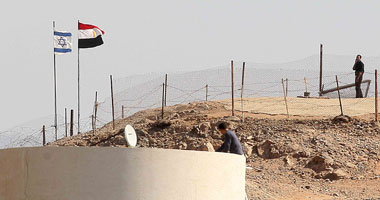
Israeli army: drug traffickers opened fire from Egypt on a military led to the injury of an officer with the rank of captain newspaper "Yediot Aharonot" Israel that after the first inquiry about the shooting on the Egyptian border - Israel, which led to the injury of an Israeli army officer, was preparing a report on incident in coordination with the Egyptian authorities. The newspaper found that, contrary to initial estimates of the Israeli army, a terrorist attack, where investigations revealed that the accident was caused by fire from drug traffickers. The newspaper added that the investigation revealed that during the afternoon smuggling gangs opened fire on one of the points on the Israeli military from 3 different places within Egyptian territory, individual Israeli army fire, wounding an officer with the rank of captain. The newspaper pointed out that the smugglers had used heavy weaponssuch as anti-tank and small arms, were called in additional forces, also participated helicopters of the Israeli air force, to meet the three terrorist cells operate drug smuggling. The newspaper pointed out that he was killed from 3 to 6 smugglers during the fire with the Israeli army, pointing out that the Egyptian authorities had found a Kalashnikov rifles and machine guns and sacks by toxic substances. Netanyahu accuses Abu Mazen to assume responsibility for an accident Jerusalem, accused Israeli Prime Minister Benjamin Netanyahu, head of the Palestinian National Authority President Mahmoud Abbas, indirect responsibility for the accident run over 9 Israelis in Jerusalem Wednesday afternoon, when the car broke into the station commander, "Thuram." The newspaper "Maariv" Netanyahu was quoted as saying so assistants working for Abu Mazen does not know peace nor security, explaining that the baby was injured the incident, in addition to injuring 8 others, including 4 in a very dangerous situation. On his part, Minister of Homeland Security "Yitzhak Ohrovi_" The incident is not an uprising, but violence must be stopped by all means, stressing that it will increase the number of troops inside Jerusalem for fear of repeating other similar events. Join 3 Israelis to the ranks of Daash and arrested one of them, Turkey revealed TV Channel Two Israeli unveiled a new Israeli recently joined the organization "Daash", but he soon left the organization and took refuge in Turkey, named Hamza Sami Mjamesh, Arabs 48 and added the channel that the story of the young Hamza when disappeared from his home since 3 months, and learned of the security services of different sources that he went to Syria to fight in the ranks of the organization, "Daash." She explained that the channel was accompanied by two other Israelis, including a young man named Muhammad Sharif of northern Israel, and another young man did not know his identity yet. She pointed out that the channel after spending 3 months in Cefouk Daash decided to return via Turkey, and during his stay with "Kevins Park Turkh" Turkish police have arrested him. The channel quoted the Israeli Ayoub Kara, head of the religious intolerance in the world of the General Security Service "Shabak", that being to communicate with the Turkish authorities to extradite them to Israel 


British Labour Party is campaigning on immigrants if he came to power

Promised the leader of the British Labour Party Ed Miliband, said Thursday that his government will propose a crackdown on immigrants during her first speech in front of the Queen to determine the government's program if his party won the next election. Miliband promised during his speech today at the Chatham House Institute for Research and by-elections in Rochester the Strode, that the Labour government would crack down on immigrants in all parts of the Kingdom. stresses draft party on the need to talk to all employees in the government who deal with the public good English. promised to make plans offer "change clear and strong" to Britain's policy toward immigration, stressing its commitment to the promises which travels on immigrants. and is expected to deliver a speech in front of Miliband Queen in next June if his party won the next general election. Miliband's speech comes just days before the scheduled speech to conservative Party leader David Cameron, and who speak the migration also. considers this issue is the focus of the next general election, especially after the exploitation of the Independence Party opposition to the principle of freedom of movement for EU citizens, in lobbying great between British citizens who reject the flow of migrants to their country, especially from countries newly organized Union.

Killing one person and wounding 11 in an explosion at a gas pipeline in western Germany

One person was killed and 11 others wounded by the explosion of a gas pipeline had been damaged during construction work in the city's western Germany. The network quoted a "Fox News" American police as saying, "The explosion occurred outside the home of the city of Ludwigshafen" .. As indicated firm gas transportation "Cascade" that it was not clear until now cause damage to the gas pipeline, which is part of the pipeline length of 57 kilometers southbound to the city of Karlsruhe. The damage to the gas pipeline during the construction work, which led to a gas leak and fire, fire suppression has been the main site next to some small fires.

China punishes 17 charge against the backdrop of disputes between villagers and construction workers


Chinese authorities have punished 17 responsible southwest of the country against the backdrop of conflict between villagers and construction workers killed at least nine dead. The network (Fox News) News of America said Thursday that it was the arrest of one of the officials involved in that conflict, which took place in the fourteenth of this month, while the 16 others were punished for their negligence in the performance of their duty. The disagreements broke out between villagers and a real estate development companies, and the villagers detained many workers were killed and four of them burned to death, while one of the two workers and other villagers died. It is noteworthy that land disputes are common in China, where the government owns most of the land of what can rid them of their users in the public interest and the establishment of real estate projects, which leaves the villagers without appropriate compensation, what drives them to commit acts of violence. 


25 girl kidnapped in Nigeria by gunmen suspected to be from Boko Haram

Witnesses said that the gunmen suspected Boko Haram Islamist militant girl kidnapped at least 25 in an attack on a remote town in northeast Nigeria, despite talks in order to release more than 200 gunmen abducted another girl in April. Kusband said John, who witnessed the attack, and three of his daughters were within Almkhtova said Doraty Tisah hijacked by two of her daughters that the attackers came in late at night and all the women were forced to go with them, then freed the older women.

EU offers 31 million dollars to combat the epidemic of Ebola

EU introduced on Thursday a new aid worth 31 million dollars to combat the threat of the spread of the Ebola virus, and within the framework of the pressure the leaders of the bloc to provide aid worth 1.26 billion dollars to finance the fight against the deadly virus. The network (Fox News) News of America that comes two days before a summit of EU leaders, which began earlier in the day, while Britain provided the largest share of the contributions by EU member states, worth 200 million dollars. He said European Commission President Jose Manuel Barroso, "The money raised will go to medical research in order to reach a precautionary measure serum to the Ebola virus." It is noteworthy that the World Health Organization had declared that the Ebola virus, which emerged in West Africa, caused the deaths of more than 4,800 people. EU aid Ebola epidemic 


Oct 22, 2014

U.S. transfers Marine murder suspect to Philippine base

MANILA Wed Oct 22, 2014 3:56am EDT
Members of the Gabriela Women's Party, a group advocating the rights of Filipino women, shout ''Justice for slain transgender Jennifer Laude'' during a protest outside the Justice Hall, where preliminary investigations into Laude's murder were being held, in Olongapo city, north of Manila October 21, 2014. REUTERS/Romeo Ranoco
Members of the Gabriela Women's Party, a group advocating the rights of Filipino women, shout ''Justice for slain transgender Jennifer Laude'' during a protest outside the Justice Hall, where preliminary investigations into Laude's murder were being held, in Olongapo city, north of Manila October 21, 2014.
Credit: Reuters/Romeo Ranoco
MANILA (Reuters) - The United States has transferred a Marine suspected of the murder of a transgender Filipino to a Philippine military base under U.S. guard, the head of the Philippine armed forces said, in line with a legal agreement between the two countries.
U.S. Private First Class Joseph Scott Pemberton is accused of murdering Jeffrey Laude, who also goes by the name Jennifer, in Olongapo City, about 50 km north of Manila.
General Gregorio Catapang told reporters Pemberton was flown to Camp Aguinaldo, the main military base in Manila.
"He was confined in a 20-foot air-conditioned van inside an U.S. military facility on our own base on Philippine soil," Catapang said. "He will be under 24-hour guard by an American soldier but we also have two Filipino soldiers in the facility."
Colonel Brad Bartelt, spokesman for the U.S. Marine Corps Forces, Pacific, said Pemberton would remain in U.S. custody in line with the Visiting Forces Agreement (VFA) with the United States.
"The suspect will remain in the Philippines during the investigation and any potential judicial proceedings in accordance with the VFA," he said in a statement.
The Philippines has said it expects to get custody of Pemberton once he is formally charged in court and any trial begins.
President Benigno Aquino described the transfer as a "healthy development".
"He is not being treated with kid gloves," Aquino told reporters, adding that the government was complying with the VFA.
Pemberton was transferred to Aguinaldo from USS Peleliu, an amphibious assault vessel, which has since been given permission to leave the Philippines.
(Reporting By Manuel Mogato, Additional reporting by David Alexander and Philip Stewart in WASHINGTON; Editing by Nick Macfie)

View the original article here

Japan team heading to North Korea to pressure it on abductees, PM says

By Elaine Lies
TOKYO Wed Oct 22, 2014 4:18am EDT
Japan's Chief Cabinet Secretary Yoshihide Suga attends a news conference at Japanese Prime Minister Shinzo Abe's official residence in Tokyo May 29, 2014. REUTERS/Yuya Shino
Japan's Chief Cabinet Secretary Yoshihide Suga attends a news conference at Japanese Prime Minister Shinzo Abe's official residence in Tokyo May 29, 2014.
Credit: Reuters/Yuya Shino
TOKYO (Reuters) - Japan is sending officials to reclusive North Korea to keep up pressure for an investigation into the fate of its citizens kidnapped decades ago to train spies, the prime minister said on Wednesday.
Japan eased some sanctions on North Korea in July in return for the North reopening its probe into the status of the abduction victims and had expected an initial report by now.
But Pyongyang said last month there were no details to report and invited Japanese officials to visit for an update.
The meetings in Pyongyang on Oct 28-29 will take place despite objections by some of the abductees' families, who remain sceptical about the North's sincerity.
But Prime Minister Shinzo Abe, whose government suffered a blow on Monday when two ministers resigned and who has made the emotive issue a priority, said the benefits of the visit outweighed the risks.
Pyongyang admitted in 2002 to kidnapping 13 Japanese citizens, with five abductees and their families later returned to Japan. Japan wants to know about the fate of the eight others, who Pyongyang has said have died, and police suspect that as many as 860 may have been kidnapped in all.
"We have said all along that North Korea must solve this issue or it has no future. This underlies any dialogue, and at this point the dialogue has just begun," Abe said.
Chief Cabinet Secretary Yoshihide Suga downplayed expectations for the visit at a news conference earlier in the day, saying that it was unclear if much new information would emerge but that reiterating Japan's stance was essential.
The North, already under U.N. sanctions for its nuclear and rocket programmes, promised to reopen the investigation in 2008, but never followed through.
It also reneged on promises made in multilateral talks aimed at ending its nuclear weapons programme and declared the negotiations had ended.
(Additional reporting by Kaori Kaneko and Antoni Slodkowski,; Editing by Nick Macfie)

View the original article here

Thailand tourist murder suspects retract confessions

BANGKOK Wed Oct 22, 2014 2:32am EDT
Tun Tun Htike (C), father of Win Zaw Htun, one of two Myanmar workers accused of killing British tourists holds a picture of Thailand's King Bhumibol Adulyadej as his wife May Thein (R) cries in front of reporters after arriving in Bangkok October 22, 2014. REUTERS/Chaiwat Subprasom
Tun Tun Htike (C), father of Win Zaw Htun, one of two Myanmar workers accused of killing British tourists holds a picture of Thailand's King Bhumibol Adulyadej as his wife May Thein (R) cries in front of reporters after arriving in Bangkok October 22, 2014.
Credit: Reuters/Chaiwat Subprasom
BANGKOK (Reuters) - Two Myanmar men accused of killing two British backpackers on a Thai holiday island have retracted their confessions, their lawyers said on Wednesday, adding further confusion to an investigation that has attracted widespread criticism.
The retractions also come amid growing diplomatic concern that the two accused may have been abused during interrogation. Thailand's human rights commission said it would launch an inquiry into allegations of police torture.
The bodies of Hannah Witheridge, 23, and David Miller, 24, were discovered on Sept. 15 by cleaners on a beach on Koh Tao, an island in the south of Thailand famous for its diving. Post-mortem examinations showed both suffered severe head wounds and Witheridge was raped.
The gruesome murders have dented tourism, which generates almost 10 percent of gross domestic product, at a time when Thailand is still under martial law after a May 22 coup that had already kept some visitors away.
Police said this month Zaw Lin and Win Zaw Htun, both 21 and from neighboring Myanmar, had confessed to the murders and that their DNA matched DNA found on Witheridge - despite the fact that the two had yet to appear in court to face any charge and speak for themselves.
"They both retracted their confessions and have signed a document that was accepted by the public prosecutor," said Nakhon Chompuchat, part of the Lawyers Council of Thailand legal team representing the pair.
Nakhon added that he was concerned about conditions in prison where the pair are being kept on the nearby island of Koh Samui.
"They have heavy chains around their ankles 24 hours a day which is how convicted prisoners are kept in Thailand, but they are not convicted prisoners."
The inquiry has been dogged from the outset by contradictory statements by officials. Police were widely accused of bungling the investigation, including chasing the wrong leads and failing to seal off the crime scene quickly enough, and pressure grew for them to solve the crime quickly.
Thai coup leader and Prime Minister Prayuth Chan-ocha defended the investigation.
"No one would dare catch the wrong person," he said this month.
Police deny that the men were tortured during interrogation and say they are being looked after well in prison. National police chief Police General Somyot Poompanmuang has also defended the investigation calling it a "perfect job".
The parents of Win Zaw Htun and Zaw Lin arrived at Bangkok's Don Muang airport on Wednesday from Myanmar to a scrum of reporters. Tun Tun Htike, Win Zaw Htun's father, held a picture of Thailand's revered King Bhumibol Adulyadej, 86, as tears rolled down his face.
Lawyers say the families will visit their sons on Thursday.
(Reporting by Amy Sawitta Lefevre; Editing by Nick Macfie)

View the original article here

Russia says Ukraine should find money to pay for gas within a week

By Katya Golubkova
MOSCOW Wed Oct 22, 2014 7:14am EDT
Ukrainian Prime Minister Arseny Yatseniuk jumps off an armored personnel carrier (APC) during a visit to the International Center of Peacekeeping and Security in Yavoriv, west of Lviv, October 21, 2014. REUTERS/Andrew Kravchenko/Pool
Ukrainian Prime Minister Arseny Yatseniuk jumps off an armored personnel carrier (APC) during a visit to the International Center of Peacekeeping and Security in Yavoriv, west of Lviv, October 21, 2014.
Credit: Reuters/Andrew Kravchenko/Pool
MOSCOW (Reuters) - Ukraine should be able to find ways of paying for Russian gas supplies within a week, Russian Energy Minister Alexander Novak said on Wednesday, suggesting a standoff would end once Moscow received financial guarantees from Kiev.
The latest round of gas talks between Moscow and Kiev ended late on Tuesday in Brussels with no agreement in a dispute that prompted Russia to cut off gas supplies to its neighbor in mid-June, potentially hurting flows west to the European Union.
But while Novak said he was optimistic for new talks on Oct. 29, Ukrainian Prime Minister Arseny Yatseniuk said he was skeptical about building ties with Russia, underlining how efforts to reach a deal are hampered by a wider political conflict between the two countries.
On Tuesday, Russia increased the pressure on Ukraine, which is dependent on Western aid, demanding assurances on how Kiev, would find the money to pay Moscow. Earlier Ukraine asked the European Union for a further 2 billion euros in credit.
Novak told reporters at an energy conference in Moscow that the two sides had almost reached a deal but that the talks came unstuck "by another issue - where will Ukraine get the money to pay in advance for gas supplies in November and December".
"If the Ukrainians have the money, then the documents will be signed. If not, then we will wait."
Sergei Kupriyanov, a spokesman for Russian gas exporter Gazprom (GAZP.MM) told Reuters that gas flows to Ukraine would be restarted once Kiev received financial aid.
"If Europe gives them the money, then gas will flow," he said.
In Kiev, Yatseniuk said Kiev was negotiating with its European partners on re-exporting gas to Ukraine and was not optimistic about the talks, overshadowed by a pro-Russian uprising in eastern Ukraine and Russia's annexation of Crimea.
"I am rather skeptical about building relations with Russia, but will see what happens on the 29th," he told a government meeting.
Kiev and Moscow have agreed on a price for Russian gas supplies during the winter at $385 per thousand cubic meters, but the two sides have stumbled over other issues, including whether Ukraine should be asked to pay up front.
The deputy head of Ukraine's state energy company Naftogaz. Serhiy Pereloma, said Ukraine expected to get 5.7 billion cubic meters of gas in reverse flows from Europe between October and March. The country needed 26.7 bcm between those two months, down 24.5 percent from last year, he added.
Those needs Ukraine wants to cover by its own gas production and gas from storages.
(Reporting by Katya Golubkova; Writing by Elizabeth Piper, editing by William Hardy)

View the original article here

Unfinished war in Sri Lanka threatens paradise regained

Sri Lankan Tamils hold pictures of family members who disappeared during the war against the Liberation Tigers of Tamil Eelam (LTTE) at a protest in Jaffna, about 400 km (250 miles) north of Colombo November 15, 2013. REUTERS/Stringer/Files
Sri Lankan Tamils hold pictures of family members who disappeared during the war against the Liberation Tigers of Tamil Eelam (LTTE) at a protest in Jaffna, about 400 km (250 miles) north of Colombo November 15, 2013.
Credit: Reuters/Stringer/Files
JAFFNA Sri Lanka (Thomson Reuters Foundation) - In the fishing village of Oori, two mothers await news of their young daughters who were taken to a care home three months ago after their alleged rape by members of the Sri Lankan navy.
In a lawyer's office in the town of Mannar, a middle-aged woman sobs uncontrollably as she recounts her five-year struggle to find her son, one of thousands of cases of young men and women who disappeared after being picked up by soldiers.
While in the city of Jaffna, a fisherman, displaced from his village after the military took his land, remembers the good life he once had as he sits in the ramshackle tenement he now shares with hundreds of others like him.
Sri Lanka is in its sixth year of peace.
Shells and artillery fire no longer pound the Indian Ocean island's north, children are no longer taken by insurgents to fight, and local tourists now flock to the palm-fringed beaches.
But for many minority Tamils here, the end of the almost three-decade-long conflict - with the crushing defeat of the separatist Tamil Tigers in May 2009 - has brought little peace, despite government efforts to smother the former rebel stronghold with visible economic development.
Behind the gleaming bridges, roads, schools and hospitals lie allegations of violations against Tamils by government forces, ranging from land grabs and intimidation to abduction and rape. Coupled with a culture of impunity, healing the wounds of war has been close to impossible, say Tamil war survivors.
Interviews conducted by the Thomson Reuters Foundation with analysts, diplomats, victims, lawyers, human rights groups, politicians, former rebels and war survivors suggest the rising disaffection felt by Tamils over continued abuses and a lack of reconciliation could again jeopardise the island's peace.
"The government has done much in terms of physical development - rebuilding roads, bridges and the railway system. But it has not prioritised reconciliation to help win over the hearts and minds of minority Tamils," said one Western diplomat in Colombo, Sri Lanka's capital.
"No accountability on war crimes and no information on the disappeared, the still large military presence and its acquisition of people's land are just some things which have led to a disenfranchised Tamil population, who could, in the medium- to long-term, once again rise up."
It is an argument the military does not refute. To be sure, it says the prospect of renewed violence by members of the Liberation Tigers of Tamil Elam (LTTE), is real which is also why it cannot remove troops from the region just yet.
Military officials claim there are thousands of former rebels still at large and being supported by Tamil groups based overseas, citing a EUROPOL report earlier this year which found networks active in countries such as Switzerland.
ICE CREAM PARLOURS AND THEATRES
Once the world's most ruthless insurgent group, the Liberation Tigers of Tamil Eelam (LTTE) took up arms in the 1980s for a separate homeland for marginalised minority Tamils - funded largely by the smuggling of arms and contraband, extortion and with money from overseas sympathisers.
Since the war ended, President Mahinda Rajapaksa has invested $6 billion into the Northern Province, buoying the region's growth rate to 18 percent in 2012/13 against the national average of 7 percent.
Jaffna, once the war-torn administrative capital of the Tamil Tigers, is now bustling, with international banks such as HSBC to ice-cream parlours, cinema halls, and supermarkets.
"If you see Jaffna today, it is totally different from during the war. Everything was in disarray, the agriculture fields, schools," said Northern Province Governor G.A. Chandrasiri, a retired Sinhalese major-general who served as Jaffna commander during the conflict.
"Children were taken out of schools and forced by the LTTE to fight. Now you will see all the children going to school."
Yet despite this development, many complain of a lack of jobs and opportunities.
Young men returning from India where they fled as refugees now work as hotel porters despite having degrees, and fishermen displaced from coastal villages complain of only "odd jobs".
Tamil politicians and religious leaders accuse authorities of giving jobs to the majority Sinhalese population, saying there is a policy of "Sinhalisation" - aimed at changing the predominately Tamil demographic in the north.
Tamil names of places such as Mathngal and Kantharodai in Jaffna, have been changed to the Sinhala names of Jambukolapatuna and Kathurugoda, add residents.
Chandrasiri refutes claims of "Sinhalisation".
"So many Tamils are coming back," he said. "Of course, Sinhalese people are also coming to the north, but these are people whose homes were originally there but were chased out by the LTTE."
"OPEN JAIL"
What dampens much of Tamil confidence in a genuine reconciliation is the looming security presence in the north with countless high-walled military camps, packed security trucks and patrols, and soldiers running small shops and hotels.
The army presence has also led to allegations of land grabs, a charge the military denies.
In the coastal region of Palali, an area stretching along the Jaffna Peninsula, where the military has set up a high security zone, more than 2,800 fishermen's families are fighting a legal battle to get their land back.
"The government wants to move us to another place, but all we want is our own land back. We are fishermen, not labourers," said Rajan Rajakantha, 42, who fled Palali 18 years ago.
The biggest worry for Tamils in districts such as Mannar and Jaffna districts, as well as in the Eastern Province's Trincomalee district, is intimidation.
Security forces visit their homes and make phone calls, especially to parents searching for missing children and displaced families fighting for their land.
Many sources interviewed by the Thomson Reuters Foundation insisted on meeting in secret locations and on the condition of anonymity.
During one interview with a displaced fisherman fighting for his land, he received a call from the security forces. Later, the army visited him to ask about the interview.
"It's like an open jail. Twenty four hours a day, they are checking up on people or going to their houses asking for the identity cards," said Primus Siraiva, a lawyer and provincial councillor of the main opposition Tamil National Alliance (TNA), a former rebel proxy political party which has a majority number of seats in the Northern Provincial Council.
RAPE AND IMPUNITY
Rajapaksa’s government is already facing a U.N. investigation over allegations of war crimes, particularly in the final months of the conflict when the rebels held more than 300,000 civilians as human shields as the military closed in.
As many as 40,000 civilians were killed by both parties, but mostly by state forces, a U.N. panel said in 2011. The Sri Lankan government says 7,000 people died.
Sri Lanka's Foreign Minister G.L. Peiris says those moves in the United Nations are politically motivated.
"It has nothing to do with the well-being of Sri Lanka, but it has a lot to do with the well-being of politicians in those countries and the influence the Tamil diaspora has in terms of its voting strength and funding," Peiris said.
The focus on events towards the close of the war appears to undermine widespread allegations of abductions, torture and rape by security forces in post-war Sri Lanka.
A March report by Yasmin Sooka, a South African human rights activist who served on the Truth and Reconciliation Commission after apartheid, documented 40 cases of torture and sexual violence on men and women by the military in detention centres.
In the fishing village of Oori on the Jaffna Peninsula, two mothers say their two daughters were taken away in early July, after the girls, aged 9 and 11, alleged they had been molested and raped by two sailors from a nearby navy base.
A lawyer representing the victims said the navy is denying the charges, and the girls have been taken to a care home.
"I spoke to her in the hospital. She told me it was the navy men who tied her hands and blindfolded her," said the mother of the 9-year-old victim.
"NOT CHILD'S PLAY"
The island's military spokesman, Brigadier Ruwan Wanigasooriya, recognises that there has been a rise in sexual crimes in the former war zone but says a disproportionate few have been committed by members of the security forces, which Tamil politicians number at around 160,000 in the region.
"There has been an increase in sexual violence. Why? Because normalcy is returning. Normal male activities are taking place. Not by the military, by the local population," Wanigasooriya said. "In cases of involvement of the army, we have taken action against them so there is no impunity."
According to data he provided, there were 16 cases of sexual assault committed by security personnel in the north in nearly seven years from 2007.
A Human Rights Watch report this year noted that torture, rape and ill treatment in custody by the security forces remain widespread. Last year the rights group detailed 75 cases of alleged rape and sexual abuse that occurred from 2006-2012 in both official and secret detention centres.
In view of "a very real threat" of the LTTE’s revival, the government has set no time frame to withdraw troops.
There are up to 4,000 suspected militants still at large in the country, said Wanigasooriya, who are still being financially supported by members of the Tamil diaspora.
But some Tamil groups based in countries such as the United States say they may want a separate state but not more violence.
"We believe only in an independent Tamil Eelam can Tamils live with peace, dignity and above all with physical security," Visuvanathan Rudrakumaran, Prime Minister of the Transnational Government of Tamil Eelam (TGTE) told the Thomson Reuters Foundation by phone from New York.
For many war survivors, however, the politics mean little. Most just want to know what happened to their loved ones who went missing in the war that killed tens of thousands.
"They wants us to forget everything and move on. But it doesn't work like that. I want my son back. I want to know where he is," said Manuel Udaya Chandra, whose son was taken away by four men dressed in army fatigues in a white van in 2009.
"There is fire in our hearts and while we do not want another war, there could be one if Rajapaksa continues his policies. It will lead to resurgence."
(Additional reporting by N. Parameswaran in Jaffna; Alex Whiting in London; Editing by Belinda Goldsmith)

View the original article here

Special Report: Traffickers use abductions, prison ships to feed Asian slave trade

A suspected victim of human trafficking prays at a government shelter in Takua Pa district of Phang Nga October 17, 2014. REUTERS/Athit Perawongmetha
1 of 14. A suspected victim of human trafficking prays at a government shelter in Takua Pa district of Phang Nga October 17, 2014.
Credit: Reuters/Athit Perawongmetha
PHANG NGA Thailand (Reuters) - When Afsar Miae left his home near Teknaf in southern Bangladesh to look for work last month, he told his mother, "I'll see you soon." He said he expected to return that evening.
He never did.
When he reported for work at a house on the outskirts of Teknaf, a man there gave him a drink of water. Soon, his eyelids sagged and his head started spinning.
When he awoke, it was dark. He had lost all sense of time. Two Bangladeshi men then forced him and seven others onto a small boat and bound them.
"My hands were tied. My eyes were blindfolded," said Miae, 20.
The boat sailed through the night until it reached a larger ship moored far offshore. Miae was thrown into its dark, crowded hold by armed guards. He and his fellow captives survived on scraps of food and dirty water, some of them for weeks.
The ship eventually sailed toward Thailand where, as Reuters reported last year, human-trafficking gangs hold thousands of boat people in brutal jungle camps until relatives pay ransoms to secure their release.
Testimonies from Bangladeshi and Rohingya survivors provide evidence of a shift in tactics in one of Asia’s busiest human-trafficking routes. In the past, evidence showed most people boarded smuggling boats voluntarily. Now people are being abducted or tricked and then taken to larger ships anchored in international waters just outside Bangladesh’s maritime boundary.
It’s unclear exactly how many people are being coerced onto the boats. But seven men interviewed by Reuters who said they were taken by force described being held until the boats filled up with hundreds of people in what are effectively floating prisons. Two of the men were taken to trafficking camps in Thailand.
"EATING LEAVES"
The experiences of these men recall the trans-Atlantic slave trade of centuries ago. Miae and four other men who were held on the same ship as him described being kept in near total darkness and being regularly whipped by guards. Two men from another boat said they were forced to sit in a squatting position and that the hatch to the hold was only opened to remove dead bodies.
Miae and 80 other men were abandoned, starving and dehydrated, on a remote island by their captors, who appear to have fled for fear their operation had been exposed, according to two local Thai officials who were involved in rescuing the men in Phang Nga, located just north of the popular tourist island of Phuket.
"Their conditions were beyond what a human should have to go through," said Jadsada Thitimuta, an official in Phang Nga. "Some were sick and many were like skeletons. They were eating leaves."
More than 130 suspected trafficking victims, mostly Bangladeshis but also stateless Rohingya Muslims from western Myanmar, have been found in Phang Nga since Oct. 11, according to Thailand’s Ministry of Social Development and Human Security. Prayoon Rattanasenee, the acting governor of Phang Nga province, said that interviews conducted by police, rights groups and his own people revealed that the victims were “brought by force. Many were drugged but we don’t know the exact number,” he told Reuters.
Evidence indicates that many of the boats appear to be from Thailand. The abducted men recalled ships with either Thai flags or Thai-speaking crews. In June, six people were killed and dozens injured when a mutiny broke out in Bangladeshi waters on what the Bangladesh Coast Guard described as a “Thai trawler” trafficking hundreds of men to Thailand.
The Bangladesh Coast Guard told Reuters it was aware of trafficking ships lurking just outside Bangladesh’s territorial waters. Intercepting them wasn’t easy, said Lieutenant Commander M. Ashiqe Mahmud.
"At night they enter our waters, take the people and again cross the boundary," he said. "It is very difficult to identify those ships at sea."
Ashiqe said the coast guard was intercepting smaller boats that were leaving Bangladeshi shores with people to feed the larger ships. A report in August by the United Nations refugee agency UNHCR said that in the first half of the year, Bangladeshi authorities reportedly arrested “over 700 people (including smugglers and crew) attempting to depart irregularly by sea from Bangladesh."
The Royal Thai Navy, which patrols the coastline with the Marine Police Division, also said it was aware people were being held captive on ships off its coast. "The truth is they use fishing boats to transport people and the bottom of the boat becomes like a room to put the people [in], but it seems like a commercial fishing boat,” said Royal Thai Navy spokesman Rear Admiral Kan Deeubol.
The ship on which Miae was held set sail with its human cargo for Thai waters four days after he was taken aboard. Others interviewed by Reuters say they spent up to six weeks in the hold of the ship anchored in the Bay of Bengal. Fourteen armed guards were aboard, said Miae.
The men were forced to squat for much of their journey and sometimes had their hands and feet bound with rope or cloth. The guards routinely beat them with sticks or whipped them with rubber fan belts.
Food was a handful of rice a day, or nothing at all. What little drinking water they received was contaminated with sea water. "We tasted it in our hands and it was salty," said Muhammed Ariful Islam, 22, a Bangladeshi fruit vendor who was on the same boat as Miae.
A NEW WEAPON
Miae, who left behind his wife and three children, said he was kidnapped. "I never thought I would leave Bangladesh," he said, sitting in a government shelter in Phang Nga.
That’s a change. In the past, many impoverished Rohingya Muslims from Myanmar and Bangladesh voluntarily boarded small, local fishing boats heading across the Bay of Bengal in the hope of reaching Muslim-majority Malaysia where they could find work. Smuggling, done initially with the consent of those involved, differs from trafficking, which involves entrapment, coercion and deceit.
Thai authorities say the existence of the boats in which people are being held against their will is a response to the more strenuous efforts they are making to combat trafficking. Police operations have led to the rescue of 200 to 300 trafficking victims in the past six months, said Police Major General Thatchai Pitaneelaboot, who is in charge of counter-trafficking operations for immigration police in southern Thailand.
“The traffickers have become more sophisticated and cautious, partly because of the Thai government policy to crack down,” he said.
The country’s military government says it is beefing up cooperation with neighboring Malaysia and has registered more than one million illegal migrant workers to prevent them falling prey to traffickers. “That’s a big step,” said Sek Wannamethee, a spokesperson for the Ministry of Foreign Affairs.
Human rights groups say the growing use of force is because trafficking has become increasingly lucrative, not because of any new measures taken by Thailand. Competition between a rising number of people smugglers explains why they are resorting to kidnapping, said Chris Lewa of the Arakan Project, a Rohingya advocacy group. "There are always five to eight boats waiting in the Bay of Bengal. And the brokers are desperate to fill them."
Matthew Smith, the executive director of Fortify Rights, an organization that documents human rights violations in Southeast Asia, said the size of the ships being used by traffickers has increased as business is thriving and the trafficking rings are able to operate largely with impunity.
THAILAND'S ROLE
A series of Reuters investigations in 2013 revealed the complicity of some Thai authorities in smuggling Rohingya and in deporting them back into the hands of human traffickers.
Thailand was downgraded in June to the lowest category in the U.S. State Department's annual ranking of the world's worst human-trafficking centers, putting it in the same category as North Korea and the Central African Republic. The same month, the Thai military vowed to "prevent and suppress human trafficking," after having seized power from an elected government on May 22.
Five months later, jungle camps are still holding thousands of people in remote hills near the border with Malaysia, according to testimonies from two recent escapees and a human smuggler.
The men and women aboard the prison ships who reach Thailand are sold for $200 each to trafficking gangs, according to one of two Rohingya men interviewed by Reuters who recently escaped from the trafficking camps.
"The camps are running very smoothly," the human smuggler, based in southern Thailand, told Reuters.
The smuggler, a long-time Rohingya resident of Thailand who spoke on condition of anonymity, estimated there were up to eight large camps holding 2,000 to 3,000 people at any one time.
The two men who recently escaped described the brutality in the camps. One of them told Reuters he witnessed camp guards gang-raping a woman.
Police Major General Thatchai describes a vast and complex trafficking network in which Bangladeshis and Rohingya kidnap and trade their own people with the help of nationals from Thailand, Myanmar, Malaysia and Pakistan. "It's transnational crime," Thatchai said.
The United Nations refugee agency UNHCR confirmed the existence of "bigger fishing or cargo vessels" that carry up to 700 passengers across the Bay of Bengal to Thailand – a five- or six-day journey.
This time of year is rush hour for smugglers and traffickers. October marks the start of the four-month "sailing season," the busiest time for smuggling and trafficking ships plying the Bay of Bengal.
The Thai Navy’s Kan said most of the boats and crews were from Thailand and that patrols against traffickers had been increased in the country’s territorial waters. But Kan said the bigger boats were operating beyond Thailand’s maritime boundaries, in international waters, and so the navy couldn’t move against them.
WHOSE JURISDICTION?
Under the United Nations Convention on the Law of the Sea (UNCLOS), to which Thailand is a signatory, each nation “shall take effective measures to prevent and punish the transport of slaves in ships authorized to fly its flag.” The Navy didn’t respond to queries on why it wasn’t acting against trafficking ships carrying the Thai flag outside its territorial waters.
Robert Beckman, the director of the Center for International Law at the National University of Singapore, said the Thai Navy would have jurisdiction over a ship flying a Thai flag in international waters.
Under UNCLOS it had a right, not an obligation, to act against someone suspected of engaging in the slave trade, he said. The “uncertain state of the law on these matters,” Beckman added, meant that navies and coast guards were “usually very reluctant to arrest persons outside their territorial waters, especially if they are on ships flying the flag of another state.”
Interviews with two Rohingya, who in early October escaped from a Thai trafficking camp, corroborate the testimonies of the Phang Nga victims. They also suggest the slave ships have been operating for some time.
Mohamad Nobir Noor, 27, says he was living in an impoverished Rohingya settlement in Bangladesh, near the border with Myanmar, when he was taken. One September evening last year, men with knives and sticks forced him onto a small boat that sailed all night to reach a larger vessel moored at sea.
It would eventually hold 550 people, Noor estimated.
They were guarded by 11 men with guns, he said. Most were Thai speakers but one was Rakhine, the majority Buddhist ethnic group in Rakhine State, where communal violence since 2012 has killed hundreds and left 140,000 homeless, most of them Rohingya.
About 30 of those being held were women. "There was one woman who was very beautiful,” said Noor. “The guards took her upstairs. When she came back she was crying and her clothes were wet. She didn't say anything."
Drinking water was so scarce that Noor said he drank his own urine to survive. When someone died, a small group of men was permitted to carry the body up on deck. A quick prayer was said and then the bodies were thrown into the water. “For the sharks," Noor said.
ESCAPE AND MUTINY
Once, Noor tried to escape by jumping overboard during a trip to the toilet. The guards dragged him back in and gave him electric shocks with wires attached to the ship's generator, he said.
Usually, most passengers were too physically weak or terrified to confront the guards. But, on at least one occasion, desperation trumped fear.
On the morning of June 11, the Bangladesh Coast Guard arrived off the coast of St. Martin’s Island, in Bangladesh waters, to record the bloody aftermath of a high-seas firefight that followed a mutiny aboard a Thai trafficking ship. Desperate for food and water, passengers had overwhelmed the crew. But another trafficking ship quickly arrived and its crew opened fire on the mutineers, said Lieutenant Commander Mahmud of the Bangladesh Coast Guard.
Six people were killed and 30 sustained bullet injuries. Among the injured were “two Thai crew members and one Myanmar human trafficker,” according to a Bangladesh Coast Guard statement.
A record 40,000 Rohingya passed through the Thai camps in 2013, Lewa of the Arakan Project said. They are held captive until relatives pay the ransom to traffickers to release them over the border in Malaysia, she said.
By early 2014, not just Rohingya but other nationalities were also ending up in the trafficking camps. In a series of raids earlier this year, Thai police found hundreds of Bangladeshis, as well as Uighur Muslims from China's restive northwestern province of Xinjiang.
The camps were also the likely destination of the Bangladeshis rescued in Phang Nga. But something went wrong.
They were brought ashore at the remote island in Phang Nga under cover of darkness. Phang Nga official Jadsada says he believed they were about to be transferred by road to another location, but a tip-off to the authorities compelled their captors to flee.
Local officials have yet to account for another 190 passengers they believe came on the same boat as Miae and Islam from Bangladesh via the Bay of Bengal. Jadsada said they might already be trapped in trafficking camps.
(Reporting By Peter Hirschberg; Additional reporting by Serajul Quadir in Dhaka and Mohammad Nurul Islam in Cox's Bazar; Editing by Peter Hirschberg and Bill Tarrant)

View the original article here